Non-UK-Registered Casinos: Licensing and Risks
 Available in GB

The term can refer to gambling operations outside UKGC oversight, but company registration and gambling licensing are not the same.
Table of Contents
- What “Non-UK-Regulated” Means
- How UK Law Treats Offshore Gambling
- How GamStop Exclusion Relates to Offshore Casinos
- What to Check Before Trusting an Offshore Casino
- Payments, Bonus Terms and Withdrawal Delays
- Safety Risks and Missing Player Protections
- Gamban and Offshore Casino Access
- What UKGC Registration Changes
- Malta-Licensed Casinos in the Wider Licensing Picture
- Curaçao Sites, GamStop and Licence Limits
What “Non-UK-Regulated” Means
A non-UK-regulated casino is an online gambling site that operates without oversight from the UK Gambling Commission (UKGC). The phrase describes the regulator responsible for the site’s gambling activity: it is not the UK regulator. It does not, by itself, tell you whether the casino holds a licence elsewhere, which authority issued it, or what that authority’s rules require.
People sometimes use “registered” to describe this status, as in “a non-UK-registered online casino”. That wording can blur two different ideas. A business may be registered as a company, while its gambling operations are licensed by a regulator. For a player trying to understand oversight, the important distinction is whether the casino has UKGC oversight or instead operates under a gambling licence from another jurisdiction. A company’s place of registration alone does not answer that question.
Where an overseas licence may come from
Non-UK-regulated casinos may hold licences associated with jurisdictions including Malta, Curaçao, Gibraltar and Anjouan. These are different places and licensing authorities, not alternative names for one regulator. A casino’s licence should therefore be understood in relation to the jurisdiction that issued it, rather than treated as a general international approval.
When considering non-UK-registered casinos in 2026, payout timing is one practical detail to check. This list gives you the available payout-speed information for each option.
1. SlotoSport
Payout speed: 1-3 business days SlotoSport lists a payout speed of 1–3 business days, giving you a stated timeframe to consider.
2. WinBeast
Payout speed: 1-3 business days WinBeast lists payouts as taking 1–3 business days. You can use this stated timeframe when assessing the operator.
3. NightWin
Payout speed: 1-3 business days NightWin gives a payout speed of 1–3 business days, a clear detail for you to factor into your choice.
4. x3bet
Payout speed: 1-3 business days x3bet lists a payout speed of 1–3 business days. This is the available timing information for you to consider.
5. Jetsetspins
Payout speed: 1-3 business days Jetsetspins states that payouts take 1–3 business days, giving you a timeframe to bear in mind.
6. BeOnBet
Payout speed: 1-3 business days BeOnBet lists payouts as taking 1–3 business days. You have a stated timeframe to consider when reviewing it.
7. SpinFormula
Payout speed: 1-3 business days SpinFormula gives a payout speed of 1–3 business days, which you can factor into your assessment.
8. Chanze
Payout speed: 1-3 business days Chanze lists a payout speed of 1–3 business days. This stated timeframe is the available practical detail for you.
9. EvoSpin
Payout speed: 1-3 business days EvoSpin states a payout speed of 1–3 business days, giving you a timeframe to consider.
10. Amunbet
Payout speed: 1-3 business days Amunbet lists payouts as taking 1–3 business days. You can take this stated timing into account.
This distinction matters when you see a site described as “licensed” without a clear reference to the authority. The word on its own does not identify who supervises the gambling operation. Nor does a licence from one of these jurisdictions make the operator UK-regulated: the term “non-UK-regulated” still applies when the site has a licence from outside the UK but no UKGC oversight.
The reverse is also worth keeping clear. A site being non-UK-regulated does not necessarily mean it has no licence at all. Some such casinos operate under overseas licensing arrangements. Others may be described in ways that do not make their regulatory position clear. The label only identifies the absence of UKGC oversight; it is not a complete account of a site’s legal or corporate status.
What the label does—and does not—tell you
The term is a broad category, not a quality rating. It does not tell you that a particular casino is reliable, that its licence is current, or that two casinos licensed in the same jurisdiction operate in the same way. It also does not establish what rules apply to a specific player or service. Those questions require information about the individual operator and the authority named on its licence.
You may encounter related descriptions such as “international”, “foreign” or “offshore”. These expressions can be used loosely, so they are less precise than asking whether a site is overseen by the UKGC or by a regulator elsewhere. Likewise, “not registered in the UK” may refer to a company’s place of registration rather than the gambling regulator. If you are comparing descriptions, focus on the stated licensing authority, not just the wording used in a banner or promotional page.
Non-GamStop European Casinos: UK Rules Explained
The same care applies to phrases suggesting that a casino is new. A recently launched site can still fall within the broad non-UK-regulated category, but “new” does not identify its regulator or explain the scope of its licence. The relevant point for this definition remains whether UKGC oversight applies, and, if not, which jurisdiction is named instead.
Why precision in wording helps
When a page calls a service a non-UK-regulated casino, it is describing its regulatory position relative to the UKGC—not saying that the site is outside every regulatory system. A Malta-, Curaçao-, Gibraltar- or Anjouan-linked licence may be presented as the basis for oversight outside the UK. The precise authority and operator still matter; the jurisdiction name is not a substitute for identifying them.
Similarly, a casino that is not registered with a UK body is not necessarily unlicensed in its own jurisdiction. “Not registered” is often used casually, while the more useful question is whether the gambling service has a licence and who issued it. Keeping those meanings separate helps you avoid treating company registration, a foreign gambling licence and UKGC regulation as interchangeable.
So, in this context, “non-UK-regulated” means that the online casino operates without UK Gambling Commission oversight. Its licensing may instead be connected with another jurisdiction, including Malta, Curaçao, Gibraltar or Anjouan. That definition sets the category; it does not, on its own, establish anything more about a particular casino.
Non-UKGC Licensed Casinos: UK Rules and Risks
How UK Law Treats Offshore Gambling
UK gambling law draws an important distinction between the business providing a service and the person using it. The Gambling Act 2005 is directed at operators that supply gambling services into the British market. An operator cannot rely on being based abroad, or on holding permission from another country, to avoid the requirement for a UK Gambling Commission licence when serving customers in Great Britain.
That rule concerns the operator’s authority to offer gambling to the British market. A foreign licence does not replace a UKGC licence or make an operator’s services authorised in Great Britain. The legal position is therefore not that any overseas-licensed site may lawfully target British customers. Where a site is operating without the required UK licence, the regulatory issue falls on the operator supplying the service.
The position of an individual player is different. UK law does not specifically make it an offence for a British citizen to use gambling services licensed abroad, and a person who gambles on an unlicensed site does not commit a criminal offence under UK law. That distinction can be easy to miss: the absence of a player offence does not grant the operator permission to serve the British market, nor does it turn an unlicensed service into a UK-regulated one.
For you, this means that questions about the operator’s compliance and your own criminal liability should not be treated as the same question. The law’s focus on the supplier does not amount to an endorsement of a non-UK registered casino, and it does not give you the protections associated with a UKGC-regulated service. If you are considering a site licensed overseas, be clear about what that licence does and does not establish: it may relate to the operator’s authority in another jurisdiction, but it is not a UKGC authorisation.
Online casino no registration in the UK: explained
The relevant market also matters. The Gambling Act 2005 governs gambling in England, Wales and Scotland; Northern Ireland has a separate legal framework. So a general statement about the law in Great Britain should not be read as a complete account of the rules in every part of the UK. If you live in Northern Ireland, check the rules that apply there before using an overseas gambling service.
In short, the law distinguishes between an operator’s obligation to hold the appropriate licence when supplying the British market and the position of a player who uses a service licensed abroad. The latter is not criminalised simply for playing, but the operator’s foreign authorisation does not make it a UK-licensed service. You remain responsible for checking the laws that apply where you live and understanding the implications before deciding whether to use such a site.
How GamStop Exclusion Relates to Offshore Casinos
GamStop is the UK Gambling Commission’s self-exclusion scheme. A casino that is not part of GamStop is outside that scheme, so registering with GamStop does not place that casino within the exclusion arrangement. This distinction matters if you are relying on self-exclusion to keep gambling out of reach.
A casino not registered with GamStop may describe itself as serving UK players, or use wording that sounds reassuring, but that does not establish that it participates in the scheme. The same applies to phrases such as “reputable” or “trusted”: they are not evidence of GamStop membership. If the exclusion is important to you, check the status with GamStop rather than relying on a casino’s marketing or on a search result.
Attention: Registration with GamStop does not provide automatic protection across every gambling site, especially those not participating in the scheme.
The key point is about coverage, not a promise that a particular site will be accessible or inaccessible. Casinos not on GamStop are not included in the UKGC scheme. You should therefore not treat your registration as protection that automatically applies to every gambling site you might encounter. Nor should you assume that a site is covered simply because it accepts customers from the UK, uses familiar branding, or offers a payment method you recognise.
This can be difficult to assess when a site’s location, licence, or terms are described in different ways. For the purpose of GamStop, the relevant question is whether the casino participates in the scheme—not whether it calls itself a UK casino, whether it has a licence elsewhere, or whether another person describes it as reputable. A Curaçao-licensed site, for instance, should not be assumed to be on GamStop just because it is discussed alongside UK gambling services. Its country of licensing does not answer the separate question of scheme participation.
The same caution applies to searches for PayPal casinos or Boku casinos that are not on GamStop. A payment option does not tell you whether a casino is included in the self-exclusion scheme. Payment availability and GamStop status are separate matters, and neither should be used as a substitute for checking the other. If you are trying to maintain an exclusion, looking for a casino by payment method can draw attention away from the protection you meant to rely on.
Online Casino with No Sister Sites in the UK
If you have excluded yourself through GamStop, take that decision seriously when considering any site described as a casino not registered with GamStop. Do not interpret the gap in coverage as a recommendation or as a sign that the site is suitable for you. It only means that the casino is outside this particular self-exclusion scheme. In practical terms, you should not count on GamStop registration alone to keep you away from a site that does not participate.
It may help to pause before opening an account, following a promotional link, or trying a different site after an exclusion has been put in place. Those steps can bring gambling back into view even when your original purpose was to stop. If you are uncertain whether a service is covered, verify it through GamStop’s own information rather than inferring membership from a casino’s name, location, or claims. Avoid relying on lists that do not clearly explain how they establish a site’s status.
People asking which casinos are not registered with GamStop may be looking for a way around an exclusion, or may simply be trying to understand what the scheme covers. Either way, a catalogue of names can become outdated and cannot replace checking the scheme’s current information. More importantly, knowing that a casino is outside GamStop does not tell you that your exclusion will protect you there. The useful distinction is straightforward: participation in GamStop is not universal, and sites outside it are not covered by the scheme.
If you have chosen self-exclusion because gambling is causing difficulty, treat that choice as a boundary worth preserving, not as a technical obstacle to test. A non-GamStop casino does not become part of your exclusion simply because you are registered with GamStop. Keep that limitation in mind before you act, and seek support if you are finding it hard to maintain the decision.
Summary of GamStop
- Casinos not on GamStop are not included in the UKGC self-exclusion scheme.
- Payment methods like PayPal or Boku do not indicate GamStop status.
- A casino’s licensing jurisdiction does not determine its participation in GamStop.
- Knowledge of a site being outside GamStop does not guarantee your exclusion will protect you there.
What to Check Before Trusting an Offshore Casino
A casino’s presence outside GamStop does not tell you whether it is trustworthy. Nor does a licence from another jurisdiction provide the same oversight or routes for recourse as UK regulation. Before you rely on a site’s claims, identify the named regulator and check whether the licence details match the operator you are dealing with. A badge or logo alone does not establish what protections apply.
Anjouan illustrates why the regulator’s role matters. Its framework does not guarantee that player funds are kept separate from the operator’s money. If the business fails, players may be unsecured creditors, rather than having a protected claim to funds held apart for them. A licence therefore does not, by itself, show that your balance is safeguarded if the operator becomes insolvent.
Consider the complaint process just as carefully. Anjouan’s authority does not handle, mediate or decide individual player complaints. Anjouan-licensed casinos also do not provide an independent dispute-resolution route comparable to services approved under UKGC regulation. The operator must respond to complaints within 30 calendar days under the framework, but a response deadline is not the same as independent review or a decision that the operator must follow.
Before depositing, read the site’s terms and find its stated procedure for raising a complaint. Check who receives the complaint, what happens if you disagree with the response, and whether the process names an independent body. Keep copies of the terms and any messages, since the options available to you may be limited if a dispute develops.
VPN-Friendly Casino UK: Rules, Risks and Payments
People looking for trusted casinos not registered with GamStop should treat “trusted” as a claim to verify, not a status created by an overseas licence. You may be able to confirm which jurisdiction issued a licence, but that does not guarantee segregated funds, independent complaint handling or a successful outcome if the operator fails to resolve a dispute. Consider those limits before risking money, and do not assume that a regulator outside the UK can provide the same recourse as a UK-approved service.
Payments, Bonus Terms and Withdrawal Delays
The payment options shown by casino sites not registered in the UK can differ from those you may expect at UK-registered casino sites. Offshore operators may accept credit cards, e-wallets, bank transfers and cryptocurrencies, sometimes using alternative payment processors. A payment method appearing at the deposit stage does not, by itself, establish that the same method will be available for withdrawals. Check the cashier’s rules for both directions of payment before sending money.
Some non-UK-based online casinos may also accept deposits charged to a mobile phone bill or taken from a prepaid balance. That possibility has been noted in a specialist review, but it should not be treated as a standard or current feature across the market. Confirm directly whether the option is available and what conditions apply. For cryptocurrency, remember that such payments can bypass the UK ban on credit-card-funded gambling; that does not make an offshore service equivalent to a UK-registered operator.
Offshore operators may accept various payment methods, including cryptocurrencies, which can bypass the UK ban on credit-card-funded gambling.
Timing is not a promise
Withdrawal estimates can be difficult to compare. Accounts of payment times disagree: one description says a withdrawal may arrive within 24 hours to 5 business days, depending on the method, while another says it can take three or four weeks. For non-UK-regulated casinos, there is no regulatory clock to enforce a stated processing time. Treat a published estimate as the operator’s own claim, not as a guaranteed deadline.
The payment route is only one part of the process. The operator may need to review a withdrawal before releasing it, and its terms may set conditions that affect when a request can be processed. Read the withdrawal rules before depositing, including any distinction between processing time and the time taken by a bank or payment provider. If the site’s terms are unclear, or different pages give different estimates, that uncertainty matters before you commit funds.
A specialist review has reported that some operators set daily, weekly or monthly withdrawal ceilings, which can mean receiving a large win in instalments rather than as one payment. This is not a rule that applies to every casino site not registered with GamStop, and limits can change. Look for the current terms on the operator’s own site and check whether the ceiling applies per transaction, across a period, or to particular payment methods. A headline withdrawal speed tells you little if a cap would extend the time needed to receive the full balance.
Casinos Without a UK Licence: Rules for UK Players
Read the bonus conditions in full
A welcome bonus can make a deposit look more valuable while adding conditions before bonus funds or related winnings can be withdrawn. A specialist review has described offshore welcome offers with wagering requirements of 35x or more. That figure is not a universal term: the requirement depends on the offer, and the wording determines what must be wagered.
A separate specialist review has described a 40x requirement applied in different ways: to the bonus and deposit together, to the bonus alone, or to a bonus combined with free spins. Those calculations produce different obligations even when the displayed multiple looks similar. Check the definition of the amount being multiplied, which games count towards wagering, and whether the offer has a deadline or other withdrawal conditions. Do not assume that a multiple applies only to bonus money unless the terms say so.
For instance, if the terms calculate wagering on the combined deposit and bonus, the amount subject to the requirement is larger than if it applies to the bonus alone. If free spins are included, their treatment may have separate conditions. The key is not the promotional headline but the precise calculation and the rules for withdrawing any resulting balance. If you cannot tell what the operator will count, you cannot reliably estimate how much play is required.
Bonuses can also affect the order in which funds are used or whether a withdrawal cancels an active offer. Before accepting one, check whether you can decline it, what happens if you withdraw before completing its conditions, and whether cash and bonus balances are treated differently. These details are especially important when a site’s cashier, promotion page and general terms do not describe the offer in the same way. Keep a copy of the terms that applied when you accepted it.
Do
- Check the exact bonus calculation and wagering requirements
- Verify the withdrawal ceilings and processing times
- Keep a copy of the terms applied when accepting a bonus
Don’t
- Assume a bonus multiple applies only to bonus money
- Rely on promotional headlines instead of precise calculations
- Assume a familiar-looking cashier guarantees a specific payout process
For casino sites not registered with GamStop, payment choice and promotional terms are operator-specific; a familiar-looking cashier or large bonus does not settle what will happen at withdrawal. Before depositing, identify the exact payment route, the withdrawal ceiling if one is stated, the time estimate, and the bonus calculation. If those details are missing or difficult to reconcile, pause rather than relying on an assumption.
Safety Risks and Missing Player Protections
A casino’s website can look polished and its games can run smoothly without offering the safeguards expected under UK Gambling Commission oversight. At a non-UK-regulated casino, responsible-gambling and data-protection rules may be less stringent. That difference matters when you want to limit your play, protect personal information or challenge how an account has been handled. A professional appearance is not evidence that protections are equivalent.
Limits may not work the way you expect
UK players at offshore casinos do not have access to the mandatory responsible-gambling tools that apply to UKGC-regulated operators. Tools such as deposit limits and self-exclusion may be absent, or may not provide the same level of protection. If you are relying on a site to help you control spending or stop gambling, do not assume that a setting on its account page offers a dependable barrier.
Check what controls are actually available before creating an account, and read how the operator says they work. Consider whether you can set a limit, change or remove it, and request an account closure. Do not treat a voluntary tool as a substitute for a formal protection: the rules and the operator’s response may differ from what you expect in a UK-regulated service. If you have already decided to stop gambling, using a site without equivalent safeguards could make that harder.
Casino no ID verification in the UK: what it means
Personal information and account access
Less stringent data-protection requirements can also affect how your information is handled. An online casino may ask for identity and payment details, but the protections governing their storage and use may not match those required of a UKGC-licensed operator. Before sharing documents, look for a clear privacy policy that explains what information is collected, why it is needed and how to contact the company about it.
Be careful with links and messages that ask you to provide account details. Use the operator’s official site to find its support channel, and avoid sending sensitive information through an unverified contact method. These steps cannot guarantee how a company will handle your data, but they can help you avoid giving it to the wrong party.
Account disputes can raise similar concerns. You might disagree with a decision to restrict an account, or be unhappy with how the operator has dealt with a complaint. The available process depends on the operator and its regulatory framework; you should not assume that a UK body can review the case simply because you are in Britain.
Fewer routes when something goes wrong
Players using offshore casinos cannot take a complaint to the UK’s Financial Ombudsman Service, and they do not receive the mandatory responsible-gambling tools available through UKGC-regulated services. They also do not have access to the UK Gambling Commission’s complaints procedure for resolving a dispute with the casino. This can leave you dependent on the operator’s own process, which may not provide independent review.
No UK Recourse
Players at offshore casinos cannot use the UK’s Financial Ombudsman Service or the UKGC complaints procedure to resolve disputes.
Before depositing, find the complaints policy and note how to submit a complaint and what information the operator requires. Save copies of relevant terms, account messages and transaction records. If the operator does not resolve an issue, the routes available to you may be limited and may differ from the protections you would have with a UK-licensed service. Keeping records can help you explain what happened, but it does not guarantee that a complaint will be upheld or that funds will be returned.
No “safe casino” label can remove these risks. A site’s claims about support, security or fairness should be assessed against its actual terms and the protections available to you—not treated as proof of UK-level oversight. If a feature is important to your wellbeing, personal-data security or ability to challenge a decision, check whether it is clearly described and whether there is an independent route to address problems. If that information is unclear, you may be taking on uncertainty that would not apply in the same way at a UKGC-regulated casino.
Gamban and Offshore Casino Access
The phrase “casinos not registered with Gamban” can suggest that an operator has a formal registration status with the service. That label alone does not establish whether a particular site can be reached when Gamban is in use. Nor does a casino’s location or licence tell you whether it will be blocked. Without reliable, current information about the specific site and your setup, it would be unsafe to promise either access or blocking.
Gamban and GamStop should not be treated as interchangeable. GamStop is the UK Gambling Commission’s self-exclusion scheme; casinos outside it are not part of that scheme. That fact does not establish how Gamban will handle a site. If you are relying on Gamban to prevent access, do not assume that a casino described as “not registered” will necessarily remain available, or that it will necessarily be blocked.
The same caution applies to searches for UK casinos that are not registered with Gamban. A site’s marketing description is not a dependable test of whether the tool will prevent access. Check the information provided by Gamban directly, and do not treat an operator’s statements as confirmation of compatibility.
There is a separate issue if you are considering a non-UK-regulated casino. Such operators may have less stringent responsible-gambling and data-protection rules than operators licensed by the UK Gambling Commission. A blocking tool cannot make an operator’s own policies stronger or provide protections that the operator does not offer.
If you have chosen to use Gamban as part of a plan to avoid gambling, treat uncertainty about a particular site as a reason not to rely on that site being inaccessible. Do not test access with a real-money account or deposit. If gambling feels difficult to control, seek support that does not depend on whether a particular casino can be reached.
What UKGC Registration Changes
“UK registered” can mean different things in ordinary conversation. For a casino serving customers in Great Britain, the important distinction is whether the operator holds a current operating licence from the UK Gambling Commission (UKGC). A company’s address or place of incorporation does not replace that requirement: operators must be licensed even when their business is based elsewhere.
That licence places the operator within the regulatory system that applies to gambling businesses serving Great Britain. It is the relevant test of whether the casino is authorised to offer gambling to customers in this market. A site may use UK-facing language or accept customers from Britain, but those details alone do not establish that it holds a UKGC licence.
Casinos & Safety: Licensing and Player Protection
The wording on a website can also be imprecise. “Registered” might refer to a company, an account, or a licence issued by another jurisdiction. If you are checking a casino’s status, look for the UK Gambling Commission operating licence rather than relying on a claim that the business is UK-based or registered somewhere. The licence should relate to the operator offering the service, not simply to a separate company mentioned in the site’s terms.
This distinction matters because an overseas licence is not a substitute for UKGC authorisation when an operator serves customers in Great Britain. The operator’s location does not change the licensing requirement. Conversely, a UKGC licence is about regulatory permission to serve this market; it is not simply a label describing where a casino was founded.
For you, the phrase “UK registered casino” is therefore best understood as a question about licensing, not geography. Confirming that an operator holds the appropriate UKGC licence tells you it falls within the British regulatory framework for gambling services. It does not mean every casino with a UK connection is licensed, and it should not be inferred from a company address or a general statement on a homepage.
Malta-Licensed Casinos in the Wider Licensing Picture
Malta is one of several jurisdictions associated with casinos that operate outside UK Gambling Commission oversight. A casino licensed there may therefore be described as non-UK-regulated: the Malta licence identifies a jurisdiction other than the UK as its licensing authority.
That label does not mean every Malta-licensed casino has the same status or offers the same service. Nor does a Malta licence, by itself, show that a casino holds a UK Gambling Commission licence. These are separate regulatory credentials, and one should not be treated as a substitute for the other.
The distinction matters when you encounter a site described as Malta-registered. “Registered” may be used informally, but it is the licence and the authority behind it that define the regulatory context. A Malta connection alone does not tell you whether the operator is authorised to serve customers in Great Britain, or what protections apply to your account.
Malta is part of the wider international licensing picture, alongside jurisdictions such as Curaçao, Gibraltar and Anjouan. Its presence in that group provides context, not a blanket assurance about an individual casino. If a site refers to Malta, read the claim as information about its stated licensing jurisdiction—not as evidence of UKGC supervision or equivalent oversight.
Curaçao Sites, GamStop and Licence Limits
A Curaçao licence and UK Gambling Commission oversight are not interchangeable. A site may hold authorisation from Curaçao while operating outside the UKGC regulatory system; the overseas licence does not, by itself, establish that the operator is regulated to serve customers in Great Britain.
The same distinction applies to GamStop. Casinos not on GamStop are outside the UK Gambling Commission’s self-exclusion scheme, and a Curaçao licence does not show that a site participates in it. If you rely on GamStop to prevent access to gambling, do not assume that an overseas licence extends that protection to a particular website.
The phrase “Curaçao casino sites not registered with GamStop” can cover different operators and arrangements. It is not proof that a specific site accepts customers in the UK, holds a current licence, or is appropriate for you to use. Check the operator’s own licence information and terms, and do not treat a licence issued elsewhere as a UKGC licence.
Before depositing, consider what it would mean to use a service outside the UKGC system. The licence jurisdiction tells you something about where the operator is authorised, but it does not establish UKGC oversight or GamStop participation. If you have self-excluded, seeking out a site outside that scheme may undermine the barrier you put in place. A Curaçao label alone cannot tell you whether the service fits your circumstances or what protections apply to you.
Are sites that are not on GamStop legal for players in the UK to access?
Yes, UK law does not make it a criminal offence for you to use gambling services licensed abroad. However, an overseas licence does not authorise an operator to serve customers in Great Britain without a UK Gambling Commission licence.
Are Anjouan casinos connected to the GamStop self-exclusion scheme?
No, Anjouan-licensed casinos are not required to integrate with GAMSTOP, so you should not expect a GAMSTOP self-exclusion to apply there.
Is an Anjouan casino licence legitimate?
An Anjouan licence is an overseas licensing arrangement, but it does not authorise a casino to operate in the UK. It also does not guarantee safeguards such as segregated player funds or independent dispute resolution.
How do casinos outside GamStop operate?
They operate without UK Gambling Commission oversight and may instead hold a licence from another jurisdiction, such as Anjouan. That overseas licence does not replace the UKGC licence required for operators serving customers in Great Britain.
Casinos

Anjouan Casino Licence for UK Players: What It Means
An Anjouan licence is separate from UKGC authorisation, so verification, terms and payment conditions need...

Best Casino App UK: App vs Browser Play
The way a casino opens on a phone can affect how quickly controls respond, even...

Foreign Casinos for UK Players: What to Check
The guide explains how offshore licensing, UK access, bonuses, payments and verification can affect player...

International Casinos for UK Players: What to Know
Explains how overseas licensing, bonus terms, payment choices and self-exclusion affect UK players considering casino...

Mobile casino deposits by phone credit in the UK
A guide to network-processed casino deposits, how they differ from card payments, and the checks...

Offshore Casino Sites for UK Players: Licensing Guide
Offshore status describes an operator’s position under UK rules, while licensing, payment terms and verification...

Offshore casinos for UK players: rules and risks
An overseas licence does not replace a UKGC licence, and the guide outlines the practical...

British casinos not on GamStop: what to know
The guide explains how UKGC licensing affects GamStop coverage, and what to check around self-exclusion,...

Casino no ID verification in the UK: what it means
The label may describe when checks appear, not whether age and identity verification can be...

Casino Sites Not Registered with GamStop: UK Rules
UKGC-licensed operators must participate in GamStop, while an overseas licence does not connect a casino...

Casinos Without a UK Licence: Rules for UK Players
A guide to overseas casino licensing, non-GamStop status, payments and the protections that do not...

Casinos That Bypass GamStop: A UK Guide
The guide explains which UKGC operators GamStop covers, how fixed exclusion periods work, and what...

Curacao Casino Licence UK: What Players Should Know
A Curacao licence belongs to a separate regulatory jurisdiction and does not mean an online...

Gibraltar Casino Licence and UK Rules
A Gibraltar location does not replace a UK Gambling Commission licence for operators serving Great...

Merkur Casino Online UK: Games, Login and Checks
Merkur-labelled games, casino accounts and operator services are distinct, so access, available slots and terms...

Trustworthy Online Casinos in the UK: What to Check
A practical framework for checking licensing, safer-gambling safeguards, terms and payment claims across UK-facing casinos....

No Account Casino UK: What to Check Before Playing
The label can describe a streamlined sign-up, but it does not remove a UKGC-licensed casino’s...

No-ID Verification Withdrawals at UK Casinos
A simple sign-up does not mean checks are waived: UK-licensed casinos must verify age and...

Non-Gamban casino UK: what access really means
A site Gamban does not block may still be covered by a separate self-exclusion agreement....

Non-GamStop Curaçao Casino Sites and UK Rules
A guide to how offshore licensing differs from UK rules, and what that means for...

Non-GamStop European Casinos: UK Rules Explained
European location alone does not establish a site's licence, safeguards or participation in the UK...

Non-UK Licence Casinos: Regulation Explained
Licensing jurisdiction, market access and player protections are separate issues when assessing an online casino....

Non-UK-Regulated Casinos in the UK: Rules and Risks
The guide explains the UKGC licensing requirement for operators serving Great Britain and the limits...
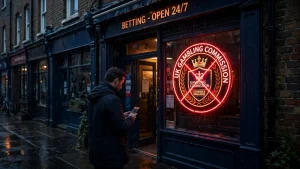
Non-UKGC Licensed Casinos: UK Rules and Risks
A practical guide to licensing claims, player protections, verification, withdrawals and payment terms at casinos...

Malta MGA-Licensed Online Casinos and UK Rules
An MGA licence identifies a Malta regulator, but operators serving Great Britain need separate UKGC...

Online casino no registration in the UK: explained
Browser play, account setup and identity checks are separate issues, and each can affect whether...

Online Casino with No Sister Sites in the UK
Sister-site status can depend on shared ownership or core technology, not simply similar designs or...

Online Slots Not on GamStop: What the Label Means
The label refers to whether a casino joins the UK self-exclusion scheme, not to a...

Safe Online Casinos in the UK: Licence and Checks
A UK licence shows an operator is subject to regulator oversight, but it does not...

Casinos Not on GamStop UK: Risks and Checks
Learn how GamStop applies, what protections may differ, and which licence, bonus and withdrawal conditions...

Trusted UK Casino Checks: Licence, Terms and Records
A UKGC licence is the regulatory baseline, while site claims and payment options need separate...

USA Casinos for UK Players: Legal Status and Risks
The key distinction is whether the operator holds a UK Gambling Commission licence; an overseas...

VPN-Friendly Casino UK: Rules, Risks and Payments
A VPN may change how a casino sees your connection, but it does not guarantee...